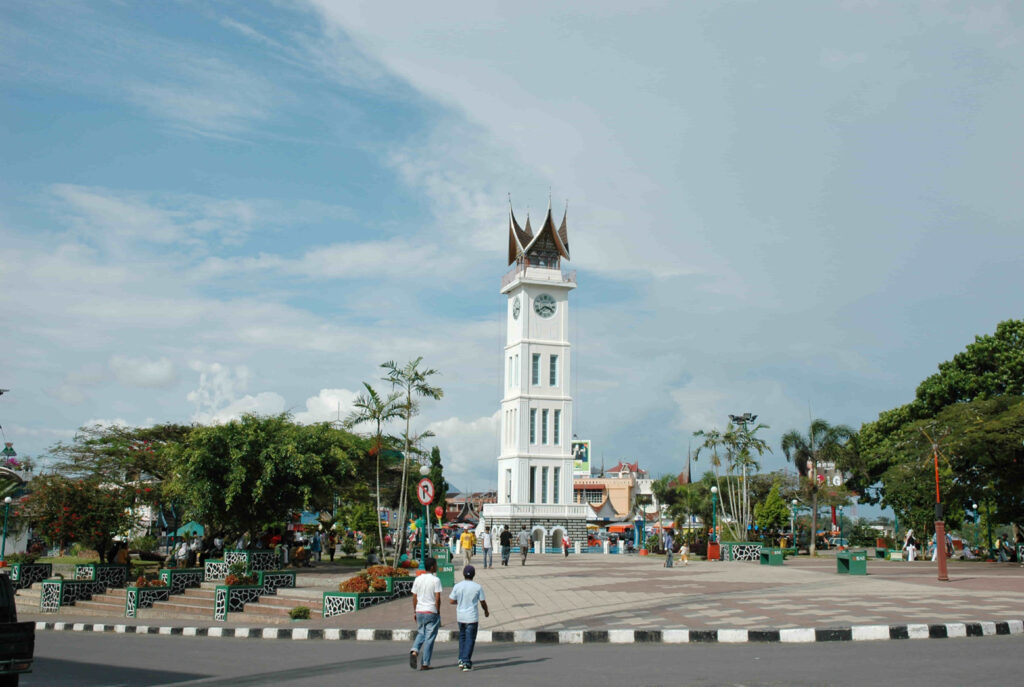


Batusangkar is a capital city located within the administrative area of Tanah Datar district, which is also the administrative center of Tanah Datar district . The city is located in three districts, namely Lima Kaum District , Tanjung Emas District , and Sungai Tarab District.
Why it is named Batusangkar cannot be known with certainty, many say that batusangkar comes from the words stone and cage, but it is not known exactly where the stone is in the cage or the stone in the shape of the cage. what is clear is that this area was previously known as Fort Van der Capellen during the Dutch colonial period , namely a Dutch stronghold erected during the Padri War . The fort was built between 1822 and 1826 and named after the Governor General of the Dutch East Indies , GAGPh. van der Capellen . This area was officially renamed Batusangkar in 1949, replacing the previous colonial name.
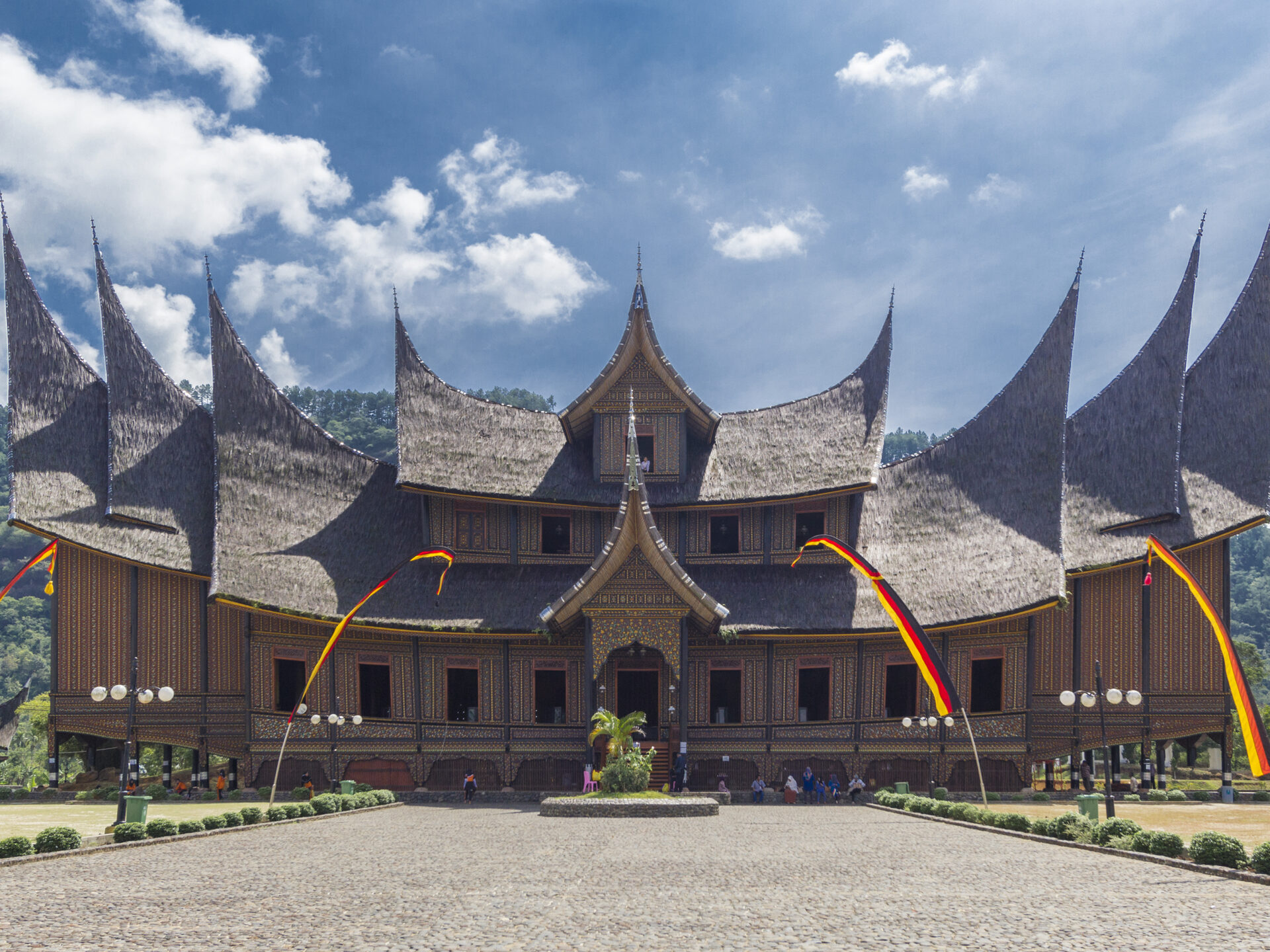
Istano Basa Pagaruyung , which is better known as the Grand Palace of the Pagaruyung Kingdom , is a museum in the form of a replica of the palace of the Pagaruyung Kingdom , located in Nagari Pagaruyung , Tanjung Emas District , Tanah Datar Regency , West Sumatra . This palace is approximately 5 kilometers from Batusangkar . This palace is a famous cultural tourism object in West Sumatra.
Istano Basa which is standing now is actually a replica of the original. The original Basa Palace was located on the Batu Patah hill and was burned to the ground in 1804 during the Padri War . The new palace was rebuilt but burned down again in 1966
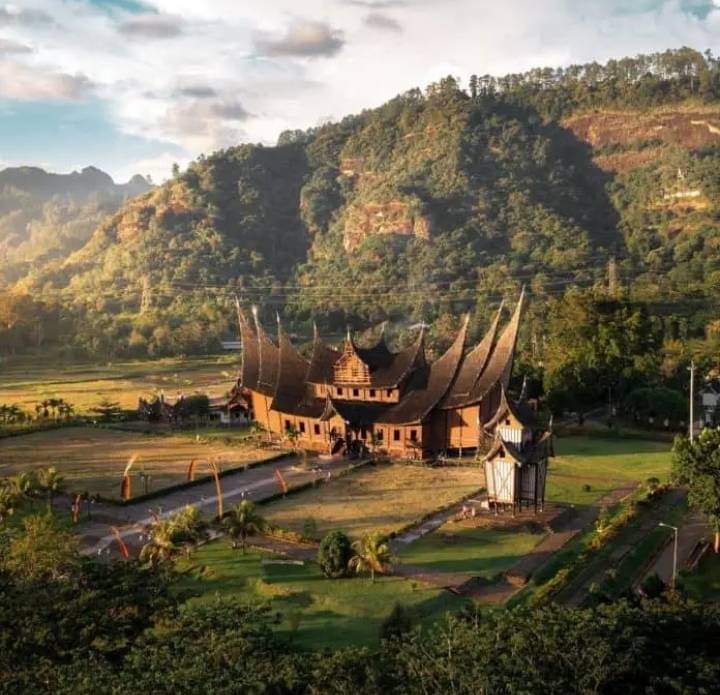
Rumah Gadang Kampai Nan Panjang is a traditional Minangkabau traditional house belonging to Datuk Panghulu Basa from the Kampai Nan Panjang tribe/clan. This Rumah Gadang is located in Nagari Belimbing (about 13 km from Batusangkar), Rangkat District, Tanah Datar Regency, West Sumatra. Approximately 300 years old, its construction has remained largely unchanged to this day.

Batikam Stone is a historical heritage object in Jorong Dusun Tuo, Nagari Limo Kaum, Tanah Datar Regency, on Sumatra in Indonesia. Translated from Indonesian, Batu Batikam means the stone that getting stabbed.
This stone is called batikam stone or punctured stone because there are puncture marks on the stone. Logically, this may be difficult for the mind to accept considering that stone is an object that is so hard that it is impossible to pierce it and leaves a hole through. According to the story believed by the local community, Batu Batikam is a puncture mark from Datuak Parpatiah Nan Sabatang’s keris which made the batikam stone a symbol of peace between the ruling leaders at that time. Another story states that this historical relic was once a place for deliberations for tribal chiefs. Another thing that adds to the uniqueness of Batu Batikam is the presence of a very large banyan tree around the area. Apart from that, the holes in the batikam stone can be touched and seen directly by visitors.
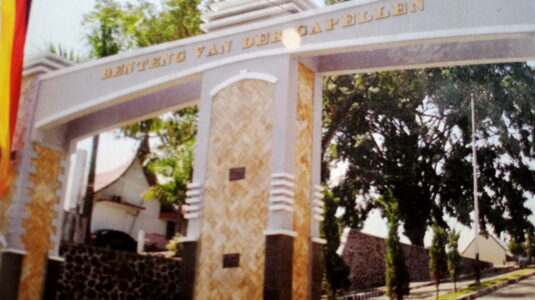
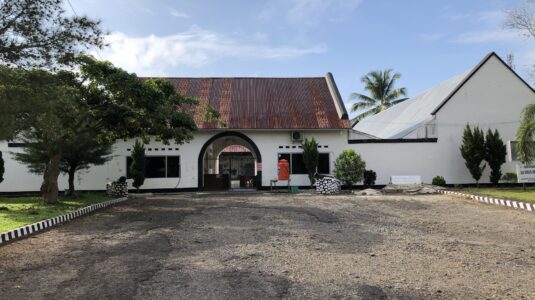
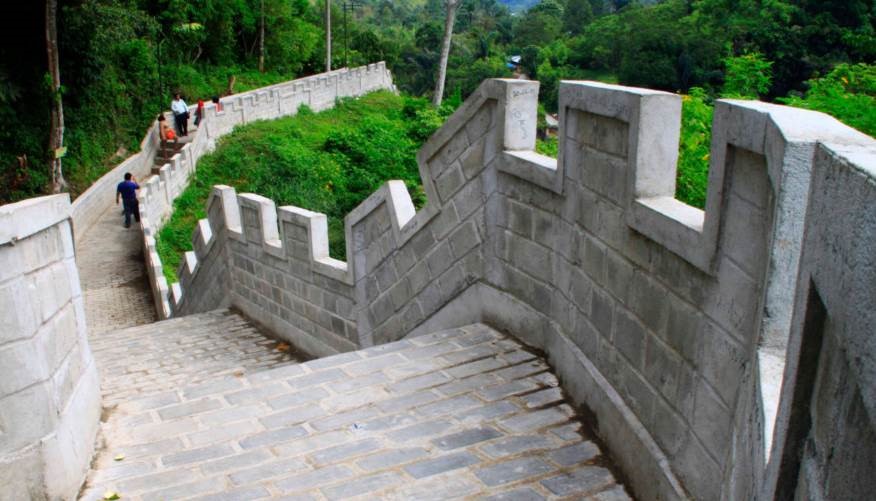
Fort Van der Capellen is a Dutch heritage fort that stands in Batusangkar, West Sumatra, Indonesia. Fort Van der Capellen is also the old name of Batusangkar. taken from the name of a Dutch general, namely Godert Alexander Gerard Philip baron van der Capellen.
Fort Van der Capellen is one of the cultural heritage objects in Batusangkar, Tanah Datar Regency. The fort site and buildings have a long history. The existence of Fort Van der Capellen cannot be separated from the war between the Indigenous People and the Religious People which occurred around 1821. This occurred because of religious conflict which was spearheaded by three Hajj people who had just returned from Mecca and wanted to purify the teachings of the Islamic religion.
Dutch troops under the leadership of Colonel Raff entered Tanah Datar to attack the people. Fort Van der Capellen in 1826 Arriving in Batusangkar, the Dutch troops were concentrated in the highest place in the city center, approximately 500 meters from the city center. At this high place, the Dutch troops then built a permanent fort. The defensive fort building, which was built in 1824, is a building that has a wall thickness of 75 cm and ± 4 meters from the building wall, a ditch and a defensive embankment are made that circle around the building. This building was later given the name Fort Van der Capellen, after the name of the Dutch Governor General at that time, namely Godert Alexander Gerard Philip baron van der Capellen.
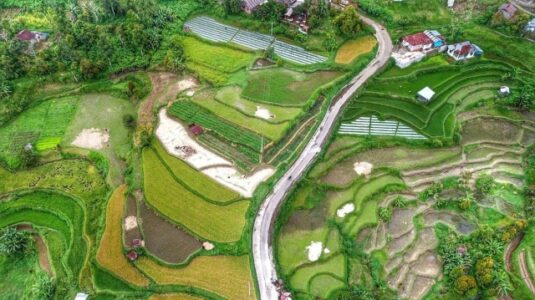
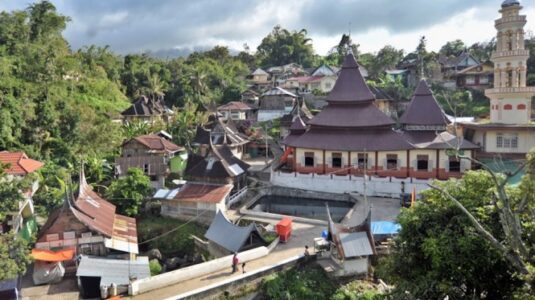
Parahiyangan or Parihyangan or Pariangan is a village in Pariangan sub-district, Tanah Datar Regency, West Sumatra Province. Map position -0.443659,100.494930 This Nagari is located on the slopes of Mount Marapi at an altitude of 500-700 meters above sea level. According to Tambo Minangkabau Pariangan is the oldest nagari in the Minang realm. This nagari is one of the best at maintaining traditional traditional houses called Rumah Gadang (Minang language, big house), so that to this day you can still find many that are well maintained. In this village you can still find surau, which is still a residence for unmarried men. And in the center of this nagari still stands a quite large traditional mosque which is thought to have existed in the early nineteenth century, where in the mosque there is a public bath with hot water which is still used today. In Nagari there is also a new cultural heritage site, Tungku Tigo Sajarangan. In May 2012, Nagari (village) Pariangan was selected as one of the five most beautiful villages in the world according to Travel Budget, an international tourism magazine.
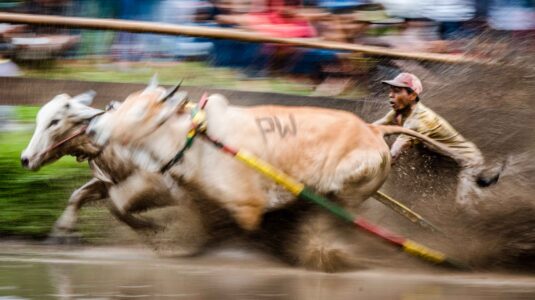
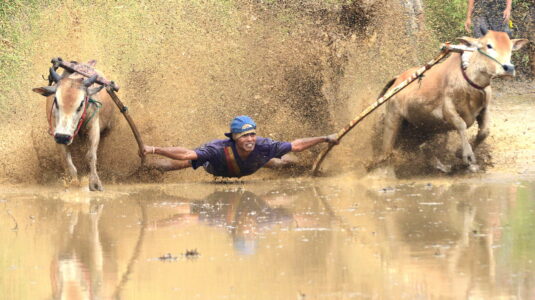
Pacu jawi (from Minangkabau: “cow racing”) is a traditional sports competition in Tanah Datar Regency, West Sumatra, Indonesia. In this event, a pair of cows run along a muddy rice field track about 60–250 meters long, while a jockey stands behind them holding both cows. Even though the name means “race”, the cows are only released in pairs with no opponents competing, and there is no official winner. Each pair of cows runs in turns, while spectators evaluate the cows (mainly based on speed and ability to walk straight), and sometimes buy superior cows at prices well above the normal price. Tanah Datar residents (mainly from four sub-districts, namely Sungai Tarab, Pariangan, Lima Kaum, and Rambatan) have held this event for centuries to celebrate the rice harvest. This event is also accompanied by a village and cultural party called alek pacu jawi.
Pacu jawi is held in Tanah Datar Regency, West Sumatra, Indonesia. According to custom, one of the conditions for the area hosting Paca Jawi is that Mount Marapi must be clearly visible. This 2,891 meter high mountain is said to be the origin of the Minangkabau people who now inhabit West Sumatra. Local residents, most of whom have farming backgrounds, organize this event when the fields are empty after harvest and before further planting. The location alternates between various nagari (village or sub-district level areas) in Tanah Datar. These nagari are located in four sub-districts which are traditionally the organizers of pacu jawi, namely Sungai Tarab, Pariangan, Lima Kaum, and Rangkat.:2 These four sub-districts consist of 26 nagari (in 2014) with heights between 550–700 meters, total rice fields 96.16 km² and more than 12,000 cows (2012 data).
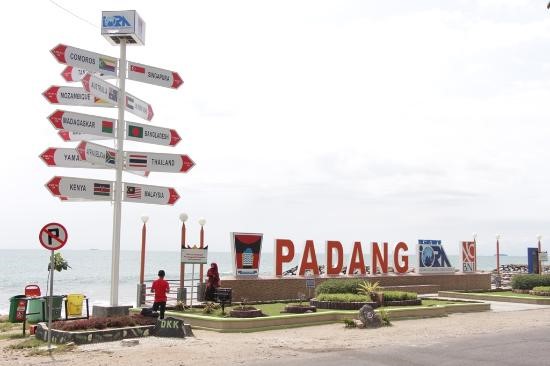
Padang, the capital of the province of West Sumatra, is mostly used by tourists as an access point to Bungus Bay, the surfing sites of the Mentawai Islands, the inland hills of Bukittinggi, and the Kerinci Seblat National Park.
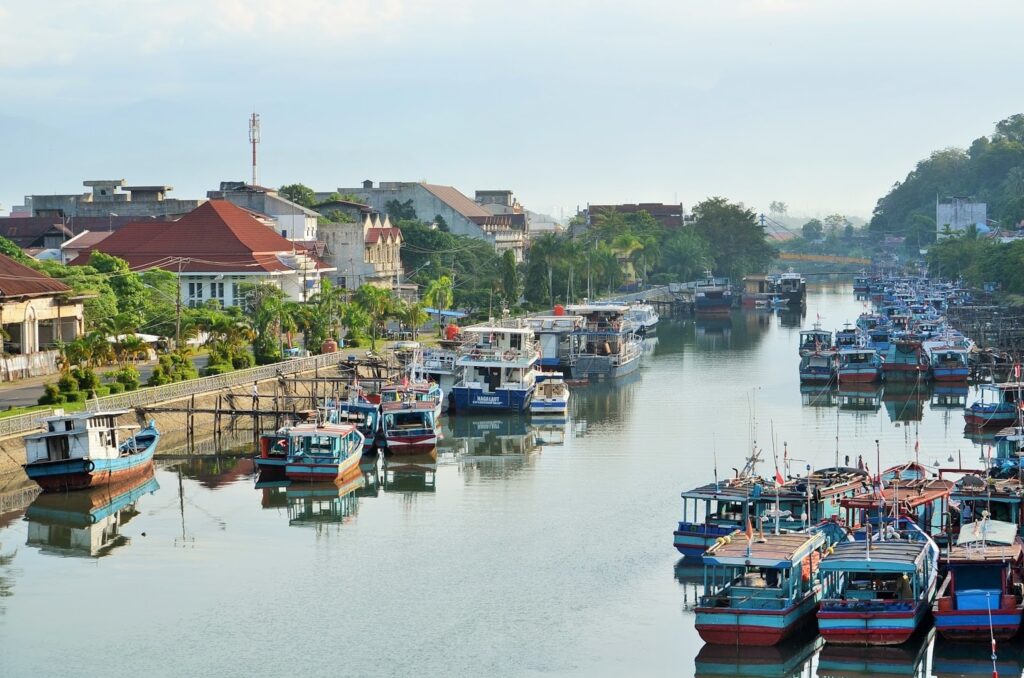
Padang was a Dutch historical harbour town, one of the main harbour in Dutch East Indies. The main attraction of the city is the colourful Dutch old town and old harbour in Muaro river, and also its old Chinatown. The city is also the home of the delicious Padang food and the town is stuffed with restaurants and street stalls.
Ladies are advised to wear long pants and at least a t-shirt with sleeves as you are entering a conservative city. Be aware that the men can get overly forward and cheeky.
It rains often in Padang. The roads flood quite easily as the city is still in the process of repairing the damage from the massive earthquake of recent years. Bring along a pair of slippers. These are useful in floods as well as for the beach.
You will experience minor tremors. Do not be alarmed.