

VISIT US:
Batusangkar, Tanah Datar Regency, West Sumatra, Indonesia
MAIL US :
bic@uinmybatusangkar.ac.id
CALL US :
+62 813-7416-6673
BIC

About Batusangkar

AboutBatusangkar

Batusangkar is a capital city located within the administrative area of ​​Tanah Datar district, which is also the administrative center of Tanah Datar district . The city is located in three districts, namely Lima Kaum District , Tanjung Emas District , and Sungai Tarab District.

History

Why it is named Batusangkar cannot be known with certainty, many say that batusangkar comes from the words stone and cage, but it is not known exactly where the stone is in the cage or the stone in the shape of the cage. what is clear is that this area was previously known as Fort Van der Capellen during the Dutch colonial period , namely a Dutch stronghold erected during the Padri War . The fort was built between 1822 and 1826 and named after the Governor General of the Dutch East Indies , GAGPh. van der Capellen . This area was officially renamed Batusangkar in 1949, replacing the previous colonial name.

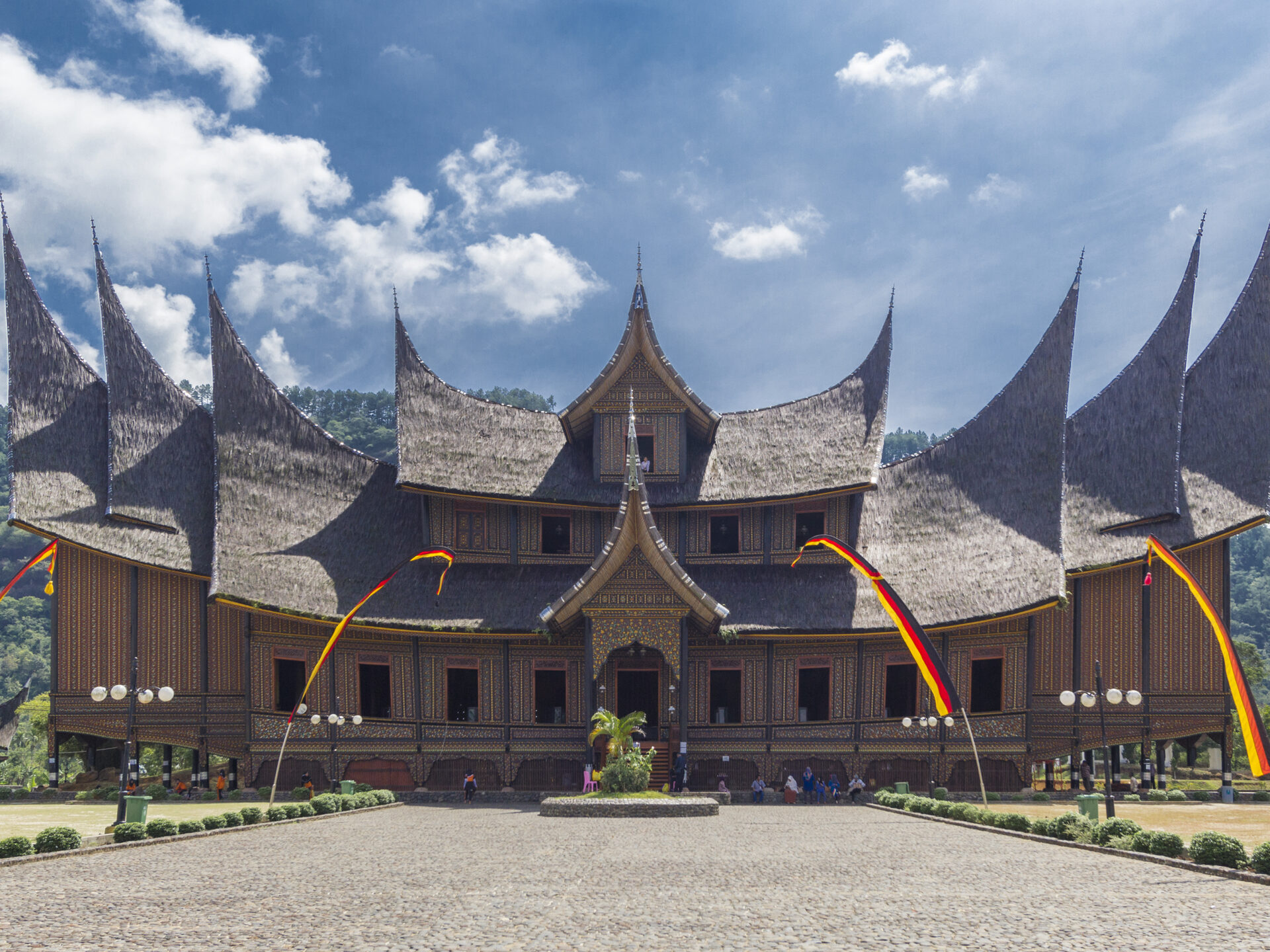
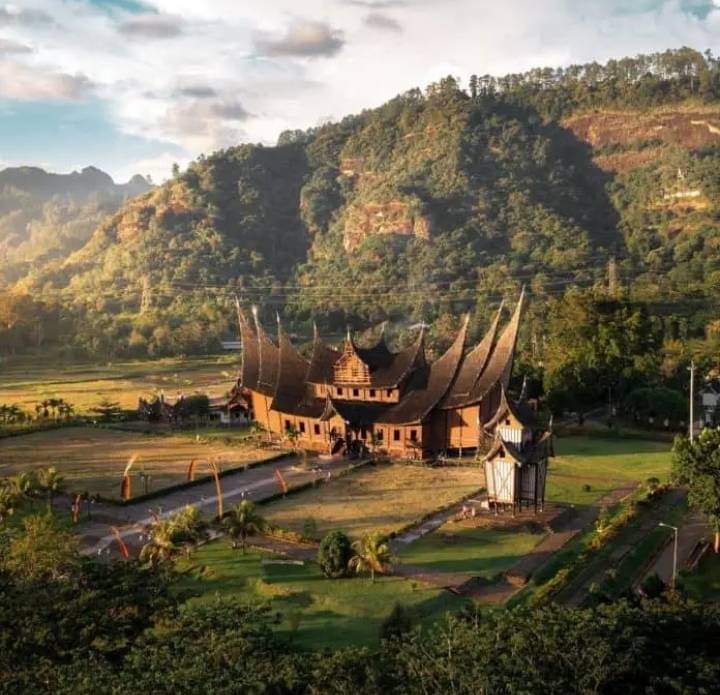
Istano Basa Pagaruyung , which is better known as the Grand Palace of the Pagaruyung Kingdom , is a museum in the form of a replica of the palace of the Pagaruyung Kingdom , located in Nagari Pagaruyung , Tanjung Emas District , Tanah Datar Regency , West Sumatra . This palace is approximately 5 kilometers from Batusangkar . This palace is a famous cultural tourism object in West Sumatra.

Istano Basa which is standing now is actually a replica of the original. The original Basa Palace was located on the Batu Patah hill and was burned to the ground in 1804 during the Padri War . The new palace was rebuilt but burned down again in 1966

Rumah Gadang Kampai Nan Panjang is a traditional Minangkabau traditional house belonging to Datuk Panghulu Basa from the Kampai Nan Panjang tribe/clan. This Rumah Gadang is located in Nagari Belimbing (about 13 km from Batusangkar), Rangkat District, Tanah Datar Regency, West Sumatra. Approximately 300 years old, its construction has remained largely unchanged to this day.

Rumah Gadang Kampai Nan Panjang
Rumah Gadang Kampai Nan Panjang is a residential house that has typical Minang style architecture with a four-gonoved roof made of palm fiber. The entire exterior of the building consists of black wood. There is only one entrance to the inside of the house and the stairs are right in the middle. This building consists of seven cubicles (rooms), each measuring 1.5 x 3 square meters. Usually a gadang house has an odd number of rooms, it could be 5, 7, 9 and so on, but in general the number of rooms available is an odd number of rooms. The shape is rectangular and the roof is made of palm fiber. The middle room of this gadang house is an open room without walls or rooms. There is only one main door and it is located in the middle. The outer and inner walls are plain with no carvings. The rooms in the back are cubicles that function as bedrooms. The chamber door is oval in size with a very small diameter (30 cm) so that to enter the chamber you have to bend over.
Like gadang houses in general, this house was built without using nails. This house has no ceiling so you can immediately see the bones that make up the roof frame, only at the left end there is a part like an attic for storage. The floor is flat and there is no platform at the end, it is covered with bamboo slats in layers. Along the back of the house leading to the rooms, there is a section of floor that is higher with one stair extending and forming the letter “U” to the left and right ends.

Batikam Stone is a historical heritage object in Jorong Dusun Tuo, Nagari Limo Kaum, Tanah Datar Regency, on Sumatra in Indonesia. Translated from Indonesian, Batu Batikam means the stone that getting stabbed.

Batikam stone is a historical object for Minangkabaunes
According to the history, the hole in the middle of the stone comes from stocked of Datuak Parpatiah Nan Sabatang. The largest stone of this culture, Batikam Stone is 1.8 meters. A long time ago, it was used as “medan nan bapaneh” or called as the place of the leader to make decisions. The formation of the stones around Batikam stone are like a square of chairs with their backs turned. In the middle, there is Batikam stone of Andes rocks. These stones’ size are about 55 x 20 x 40 centimeters, with the shape looking like a triangle. Batikam stone becomes one of evidence about the existence of a Minangkabau kingdom in Neolithic era.  Batikam stone is a pierced stone which symbolizes the importance of peace and discussion in Minangkabau society

This stone is called batikam stone or punctured stone because there are puncture marks on the stone. Logically, this may be difficult for the mind to accept considering that stone is an object that is so hard that it is impossible to pierce it and leaves a hole through. According to the story believed by the local community, Batu Batikam is a puncture mark from Datuak Parpatiah Nan Sabatang’s keris which made the batikam stone a symbol of peace between the ruling leaders at that time. Another story states that this historical relic was once a place for deliberations for tribal chiefs. Another thing that adds to the uniqueness of Batu Batikam is the presence of a very large banyan tree around the area. Apart from that, the holes in the batikam stone can be touched and seen directly by visitors.
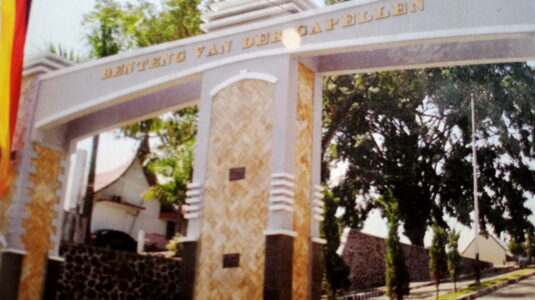
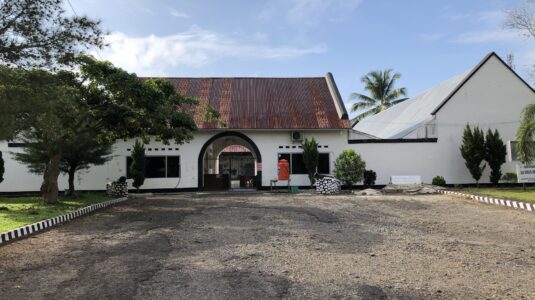
Fort Van der Capellen is a Dutch heritage fort that stands in Batusangkar, West Sumatra, Indonesia. Fort Van der Capellen is also the old name of Batusangkar. taken from the name of a Dutch general, namely Godert Alexander Gerard Philip baron van der Capellen.

Fort Van der Capellen is one of the cultural heritage objects in Batusangkar, Tanah Datar Regency. The fort site and buildings have a long history. The existence of Fort Van der Capellen cannot be separated from the war between the Indigenous People and the Religious People which occurred around 1821. This occurred because of religious conflict which was spearheaded by three Hajj people who had just returned from Mecca and wanted to purify the teachings of the Islamic religion.

Dutch troops under the leadership of Colonel Raff entered Tanah Datar to attack the people. Fort Van der Capellen in 1826 Arriving in Batusangkar, the Dutch troops were concentrated in the highest place in the city center, approximately 500 meters from the city center. At this high place, the Dutch troops then built a permanent fort. The defensive fort building, which was built in 1824, is a building that has a wall thickness of 75 cm and ± 4 meters from the building wall, a ditch and a defensive embankment are made that circle around the building. This building was later given the name Fort Van der Capellen, after the name of the Dutch Governor General at that time, namely Godert Alexander Gerard Philip baron van der Capellen.

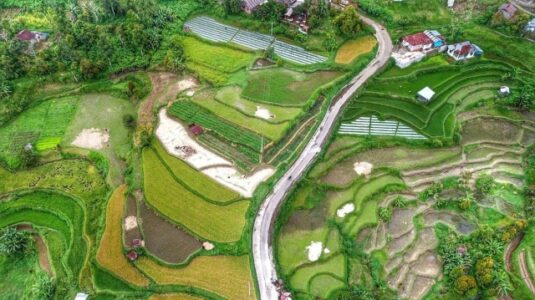
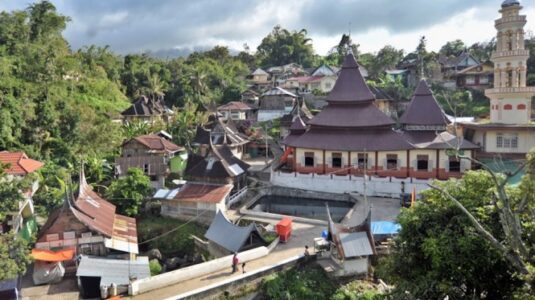
Parahiyangan or Parihyangan or Pariangan is a village in Pariangan sub-district, Tanah Datar Regency, West Sumatra Province. Map position -0.443659,100.494930 This Nagari is located on the slopes of Mount Marapi at an altitude of 500-700 meters above sea level. According to Tambo Minangkabau Pariangan is the oldest nagari in the Minang realm. This nagari is one of the best at maintaining traditional traditional houses called Rumah Gadang (Minang language, big house), so that to this day you can still find many that are well maintained. In this village you can still find surau, which is still a residence for unmarried men. And in the center of this nagari still stands a quite large traditional mosque which is thought to have existed in the early nineteenth century, where in the mosque there is a public bath with hot water which is still used today. In Nagari there is also a new cultural heritage site, Tungku Tigo Sajarangan. In May 2012, Nagari (village) Pariangan was selected as one of the five most beautiful villages in the world according to Travel Budget, an international tourism magazine.

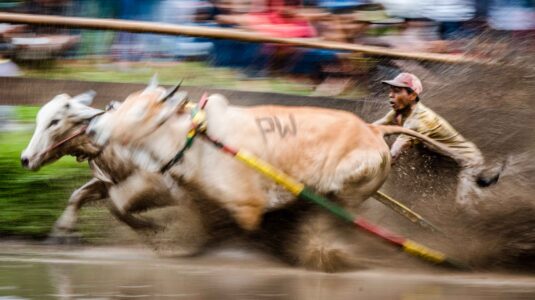
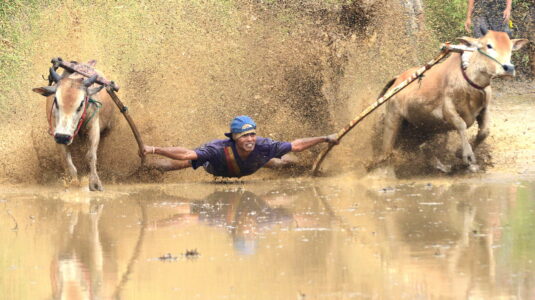
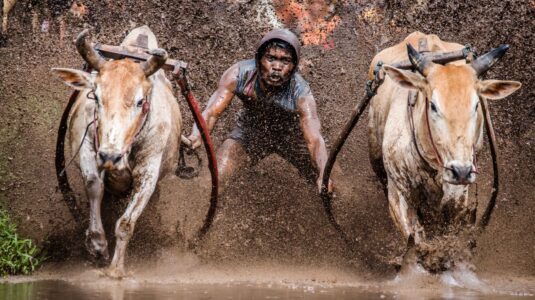
Pacu jawi (from Minangkabau: “cow racing”) is a traditional sports competition in Tanah Datar Regency, West Sumatra, Indonesia. In this event, a pair of cows run along a muddy rice field track about 60–250 meters long, while a jockey stands behind them holding both cows. Even though the name means “race”, the cows are only released in pairs with no opponents competing, and there is no official winner. Each pair of cows runs in turns, while spectators evaluate the cows (mainly based on speed and ability to walk straight), and sometimes buy superior cows at prices well above the normal price. Tanah Datar residents (mainly from four sub-districts, namely Sungai Tarab, Pariangan, Lima Kaum, and Rambatan) have held this event for centuries to celebrate the rice harvest. This event is also accompanied by a village and cultural party called alek pacu jawi.

Pacu jawi is held in Tanah Datar Regency, West Sumatra, Indonesia. According to custom, one of the conditions for the area hosting Paca Jawi is that Mount Marapi must be clearly visible. This 2,891 meter high mountain is said to be the origin of the Minangkabau people who now inhabit West Sumatra. Local residents, most of whom have farming backgrounds, organize this event when the fields are empty after harvest and before further planting. The location alternates between various nagari (village or sub-district level areas) in Tanah Datar. These nagari are located in four sub-districts which are traditionally the organizers of pacu jawi, namely Sungai Tarab, Pariangan, Lima Kaum, and Rangkat.:2 These four sub-districts consist of 26 nagari (in 2014) with heights between 550–700 meters, total rice fields 96.16 km² and more than 12,000 cows (2012 data).

History of Padang

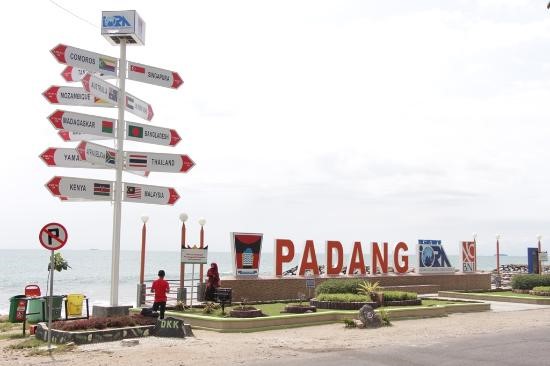
Padang, the capital of the province of West Sumatra, is mostly used by tourists as an access point to Bungus Bay, the surfing sites of the Mentawai Islands, the inland hills of Bukittinggi, and the Kerinci Seblat National Park.

Padang was a Dutch historical harbour town, one of the main harbour in Dutch East Indies. The main attraction of the city is the colourful Dutch old town and old harbour in Muaro river, and also its old Chinatown. The city is also the home of the delicious Padang food and the town is stuffed with restaurants and street stalls.

Ladies are advised to wear long pants and at least a t-shirt with sleeves as you are entering a conservative city. Be aware that the men can get overly forward and cheeky.

It rains often in Padang. The roads flood quite easily as the city is still in the process of repairing the damage from the massive earthquake of recent years. Bring along a pair of slippers. These are useful in floods as well as for the beach.

You will experience minor tremors. Do not be alarmed.

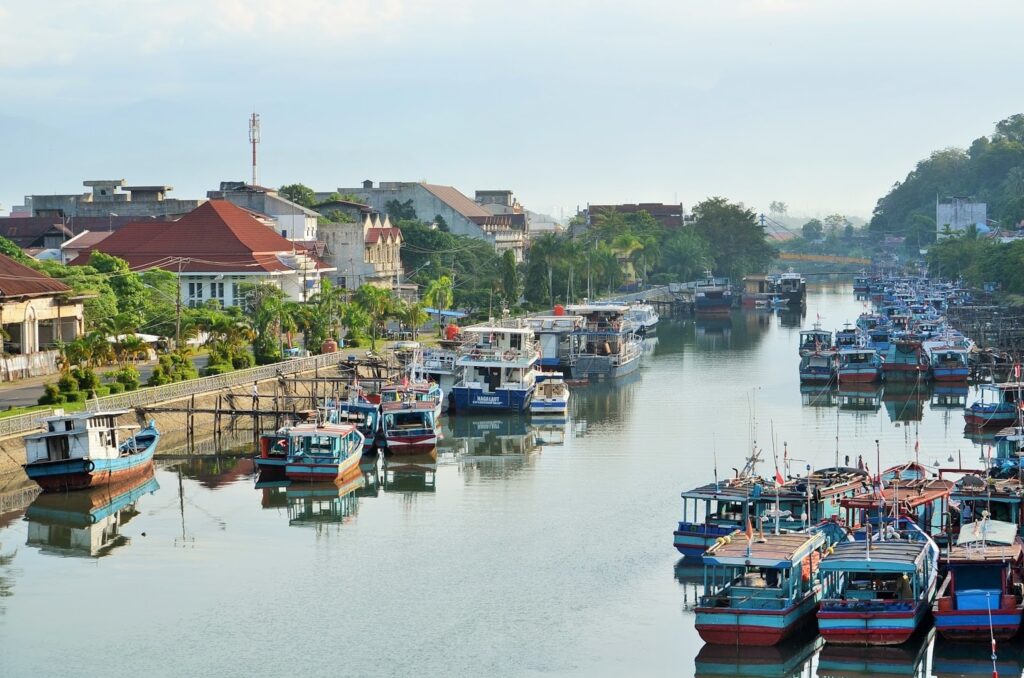
Old Town of Padang (source: https://www.palanta.id)
  • Old Town of Padang. This historical town of Padang with many old buildings and a colouful harbour with Dutch architecture is Padang’s main attraction. It’s located beside the Muaro River. Walk along the beautiful pedestrian at the river bank with a row of old Dutch buildings. On the river there is a historical harbour of Padang built by Dutch. Now the harbour and the river is full of colourful little boats. There’s also a beautiful bridge on the river, Sitti Nurbaya Bridge with colourful lights on night. Still in the old town, there’s an old Chinatown with many old shophouses. There’s a beautiful old Chinese temple, See Hien Kiong Temple and a beautiful old mosque, Muhammadan Mosque.
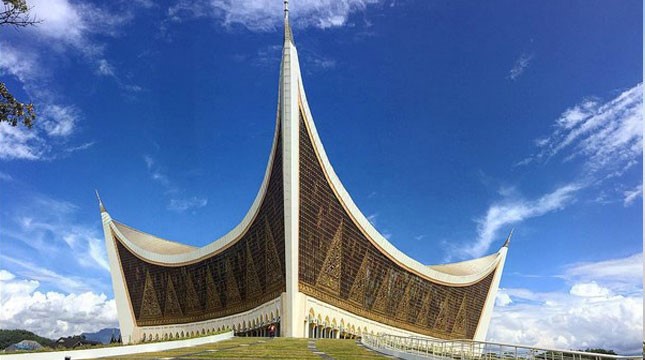
The Great Mosque of West Sumatra (source://industry.co.id)
  • The Great Mosque of West Sumatra. Located in Padang, it’s the one of the great mosque in Sumatra Island that bring that contemporary architect fuse with traditional home of Minangkabau Culture (the great house of Minangkabau)
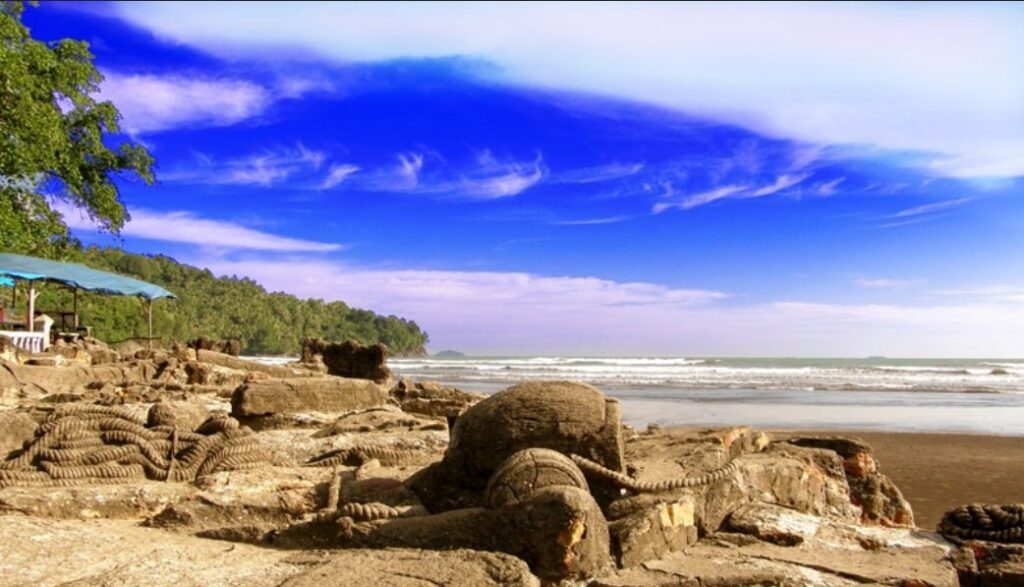
Air Manis Beach (source: http://kumpulanwisata.com)
  • Air Manis Beach. It is most famed for Batu Malin Kundang (Stone of Malin Kundang), a stone shaped like a prostrating man. According to local legend, this stone is Malin Kundang , the ungrateful son who disowned his poor mother after coming home as a rich man from his travels. His mother cursed him into stone, as well as the remains of his ship, which can also be seen near his stone. There is a tidal island from the beach here, with nice clean (by Indonesian standards) water and sand.
Padang Beach (source: https://eljohnnews.com)
  • Padang Beach. You can ride the bendi (a horse-drawn carriage) along the beach, and stop by the rows of shops to eat some rujak as you watch the waves. It is recommended that you get a glass of naga (dragon fruit) juice from one of the stalls that line the beach and drink it as you enjoy a leisurely stroll down the shore. You go down the south of Teluk Bayur Harbour, up and through steep hills (don’t try and take a bus, there is an [Angkot] that goes all the way).
Koto Gadang Village (source: http://cumacuma.org)
  • Koto Gadang. It’s a quiet and pleasant farmer village near the Sianok Canyon. Most of houses there are built with Dutch architecture. Dutchs built those houses as their resting villas. After most of dutchs back to the Netherlands after the independent of Indonesia, people occupied those beautiful villas as their homes. The village is very quiet and pleasant because most of the residents have migrated to many cities in Indonesia and Malaysia. The village is famous for its silverworks hadicrafts. One of the most famous handicraft centre there is Handicraft Institution of Amai Setia, built by Rohana Kudus, one of the most important female emancipation historical figure in Indonesia.
Jam Gadang, Bukittinggi (source: http://minangkabautours.com)
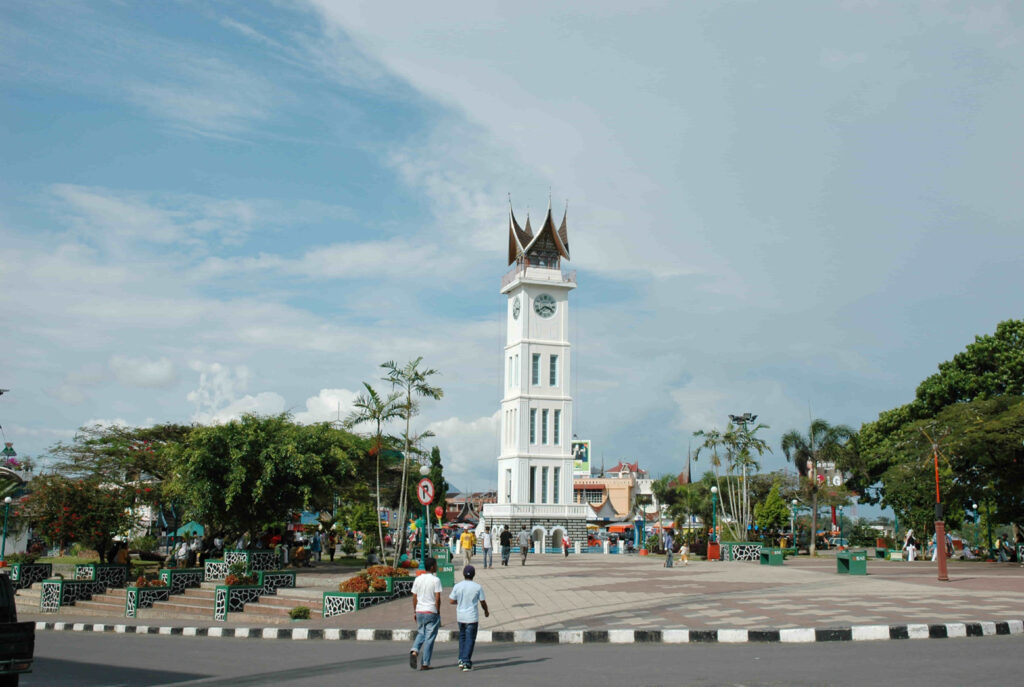
  • Jam Gadang. Means, The Great Clock. This is the main landmark of Bukittinggi. It’s an old high clock tower built by Dutch with Bagonjong roof (Minangkabau traditional roof) on the top of the tower. Jam Gadang is stand proudly at the center of the town square. Jam Gadang bustles with little stalls selling food and souvenirs throughout the day. Lots of tourists gather there. Food stalls unfold with variety and aroma towards nightfall. The atmosphere is festive with colourful lights at night and it can get quite crowded. While Bukittinggi is considered safer than most other parts of Indonesia, it would still be a good idea to keep your bags close in this crowded area. There are horse carriages waiting around the Jam Gadang square. Please be cautioned that the rides are very costly, therefore please ask for their rates first. Across the square is a traditional tourist markets, called Pasar Atas and Pasar Bawah. Many goods sold there, from souvenirs, handicrafts, textiles, traditional food, traditional snacks, to fresh fruits, vegetables, chicken, meat and fish. Behind the market is the town’s old Chinatown with many old shophouses. On the other side of the Jam Gadang Square is The Palace of Bung Hatta. It’s a historical building, originally as the palace of Indonesia’s first vice president, Muhammad Hatta. Beside the palace is The Hills Hotel, a five star hotel in a historical building with rich European and Middle Eastern architecture. On the other side of Jam Gadang Square is a mall called, Bukittinggi Plaza.
  • The Birth House of Bung Hatta. Muhammad Hatta (Bung Hatta) is the first vice president of Republic of Indonesia. The house is a reminiscent of traditional Minangkabau rural house and custom. The house also has the collection of Hatta and Hatta’s family stuffs.
  • Rumah Gadang Baanjuang. A rumah gadang (Minangkabau traditional house) used as a museum of Minangkabau culture and history. There’s also a collection of strange animals. It’s located inside the Bukittingi Zoo.
  • Bukittinggi Zoo. The town’s zoo, located on the top of a hill, opposite to the hill of Fort de Kock. It’s so not a world class-zoo. Some people may not be comfortable visiting this zoo due to the very bad maintenance and the very stressful conditions under which the animals are kept. Two elephants have their tusks shortened and one front leg and one hind leg locked in taut chains so that their movement is limited to but one pace back and forth all the time. A Sumatran tiger seems to have had one paw freshly amputated as of Feb 2013. Two pelicans are kept in an enclosure with a very low-hanging wire ceiling, which prevents them from flying at all. A herd of deer sniff around for food on grounds composed largely of their own filth. A family of porcupines share extremely cramped quarters and an alpha male orang utan sits alone in its cage with deadened eyes.
  • Limpapeh Bridge. A pedestrian overpass connects the Fort de Kock on one hill to Bukittinggi Zoo on another hill. It’s a beautiful bridge with Minangkabau architecture.
  • Japanese Caves. A network of underground bunkers and tunnels built by local people under the Japanese’s army order during World War II. The entrance of the tunnel is located in Panorama Park
  • Fort de Kock. A fort built by the Dutch (actually, it’s just a little outpost tower). It’s located in a nice park with several species of bird in cages. It is arguable whether some of these birds should be kept in such conditions. For instance, a Sea Eagle is kept in a cage with inadequate space for its size and habits. The park is located on the top of a hill, so you can see the panoramic view of the town from the park.
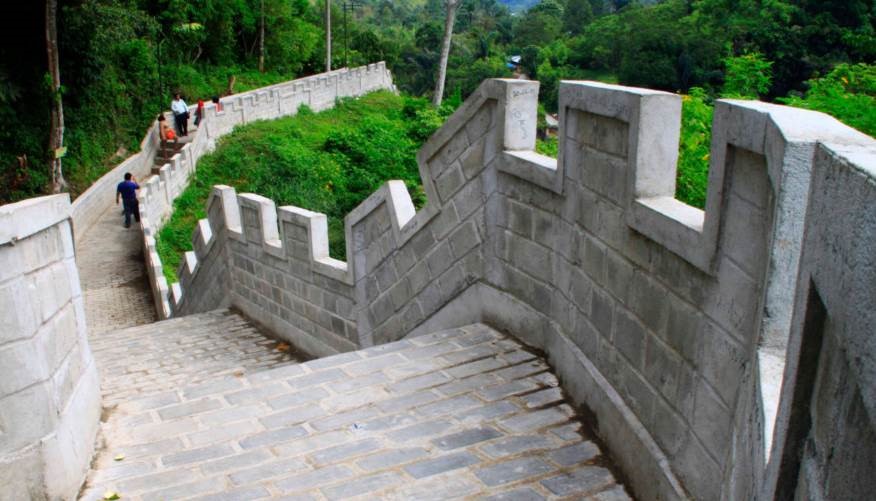
  • Sianok Canyon. A green, long and steep canyon. One of the most beautiful natural scenery in West Sumatra. You can enjoy the beautiness from Panorama Park. There is a two-storey observation tower that overlooks the Sianok Canyon at the park. The monkeys there are friendly but they can be quite aggressive, especially if they know you have food. During dusk you can observe megabats flying from the gorges to the forest in order to feed from the fruits on the trees. Another way to enjoy the canyon is by walk down the canyon through the The Great Wall of Koto Gadang. Along the walk, you’ll see rice fields, forest, and a little river, and of course, the beautiful canyons as the backgound. There’s a little clear river on the valley floor. One of the most iconic canyon is Tabiang Takuruang (means, isolated gorge). It’s a single isolated slim gorge surrounded by the canyons. You can’t see the gorge from neither Panorama Park nor The Great Wall of Koto Gadang. To get to Tabiang Takuruang, you should go down the canyon and trace the street through the village.
  • Mount Marapi and Mount Singgalang. Bukitting is located between two majestic volcanoes, Mount Marapi and Mount Singgalang. You can do mountain climbing and trekking there.
  • Koto Gadang. It’s a quiet and pleasant farmer village near the Sianok Canyon. Most of houses there are built with Dutch architecture. Dutchs built those houses as their resting villas. After most of dutchs back to the Netherlands after the independent of Indonesia, people occupied those beautiful villas as their homes. The village is very quiet and pleasant because most of the residents have migrated to many cities in Indonesia and Malaysia. The village is famous for its silverworks hadicrafts. One of the most famous handicraft centre there is Handicraft Institution of Amai Setia, built by Rohana Kudus, one of the most important female emancipation historical figure in Indonesia.